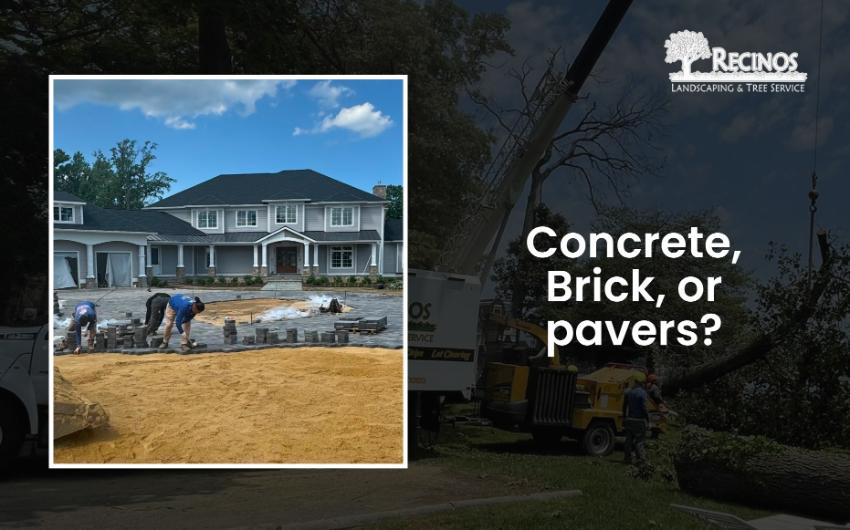
Concrete, brick, or pavers? A calm, practical guide to picking the right hardscape material for Maryland homes, plus how it connects to tree and site work.
How to Choose the Right Hardscape Material in Maryland
When homeowners plan a patio, walkway, or driveway, the first real decision is rarely the design. It’s the material.
The surface you choose shapes:
- How the space looks
- How it holds up to Maryland’s seasons
- How much upkeep it demands
- How well it protects the ground and structures around it
Concrete, brick, and pavers are the three choices most property owners weigh, and each one earns its place for different reasons.
This guide walks you through:
- How concrete, brick, and pavers materials compare
- How to choose the right hardscape material
- Tips on how you plan to use the space
- Why an on-site evaluation matters
How Will You Use The Outdoor Space?
Before comparing materials, it helps to be clear about what the surface has to do.
A patio built for entertaining carries different demands than a quiet garden path, and a driveway that supports daily vehicle traffic needs more strength than a walkway.
Foot traffic, vehicle weight, drainage, and how the area connects to the rest of your landscape all shape which material makes sense.
It’s also worth thinking about maintenance from the start.
Some homeowners want a surface they can install and largely forget. Others are happy to seal, sweep, or replace the occasional unit to keep a specific look.
Matching the material to how much upkeep you’re realistically willing to do prevents frustration later and helps the finished project perform the way you expected.
Concrete Materials: Versatile and Budget-Friendly
Poured concrete remains one of the most common hardscape materials, and for good reason.
It’s typically the most affordable option up front, installs relatively quickly, and works for:
- Patios
- Walkways
- Driveways
- Outdoor living
It’s no longer limited to a plain gray slab either.
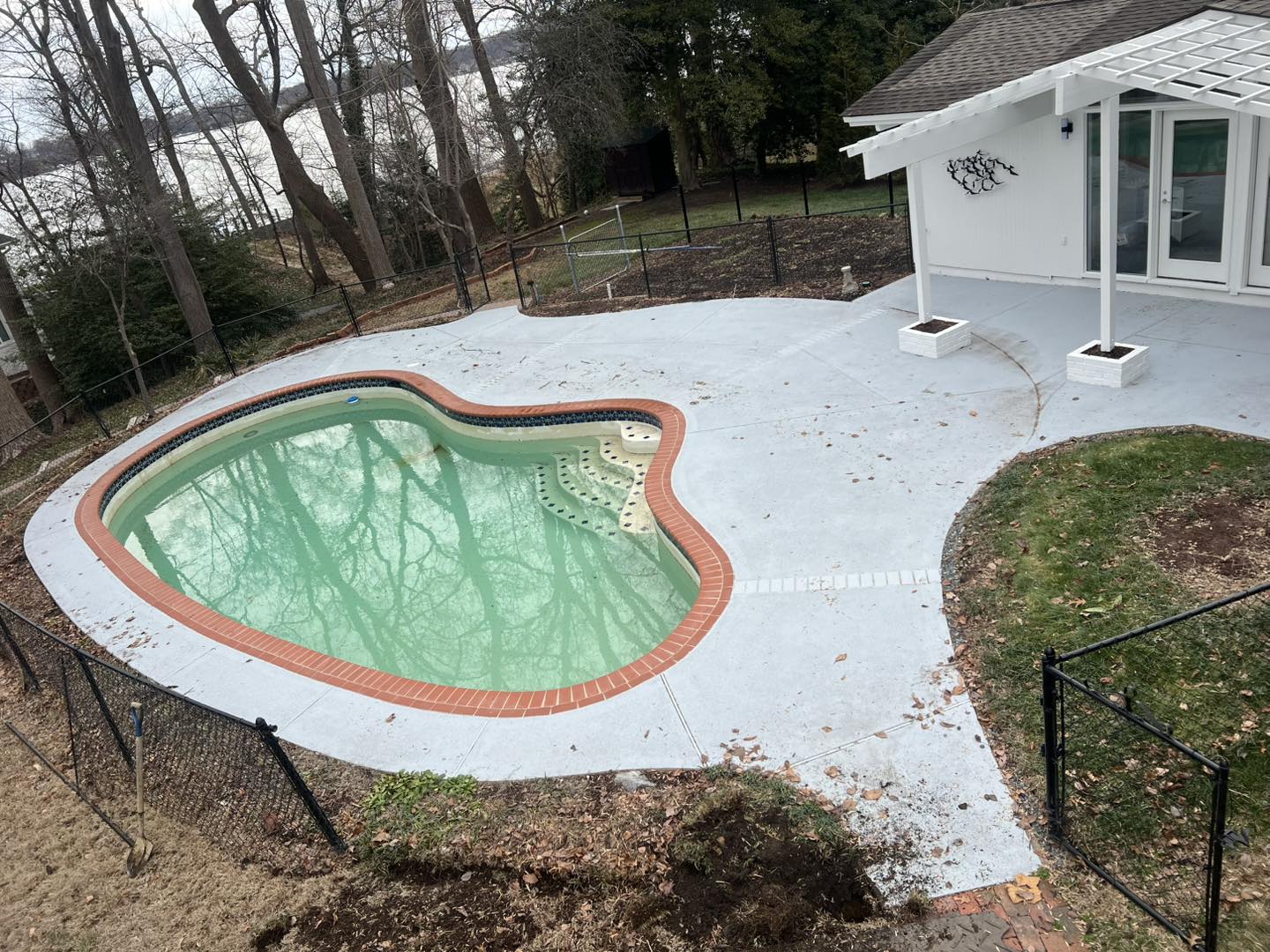
Concrete can be stained, stamped, or textured to mimic stone, brick, or tile, which gives it real design flexibility at a lower cost than the materials it imitates. The trade-off is repair.
A solid slab is strong, but Maryland’s freeze-thaw cycles can cause cracking over time, and when a poured surface cracks, you generally can’t fix one section cleanly.
The patch tends to show. Proper base preparation and control joints reduce that risk, but concrete asks you to accept that repairs, when they come, are more visible than with modular materials.
Concrete tends to be the right call when budget is the leading concern.
Use this image: https://recinostreeservice.com/wp-content/uploads/2026/04/bluestone_pool_patio_during_concrete.jpg
Brick Materials: Classic Looks and Easy to Repair
Brick brings a timeless, traditional appearance that suits many Maryland homes, especially older or colonial-style properties.
It comes in a range of shades and can be laid in patterns like herringbone or basketweave, which adds character to patios and walkways.
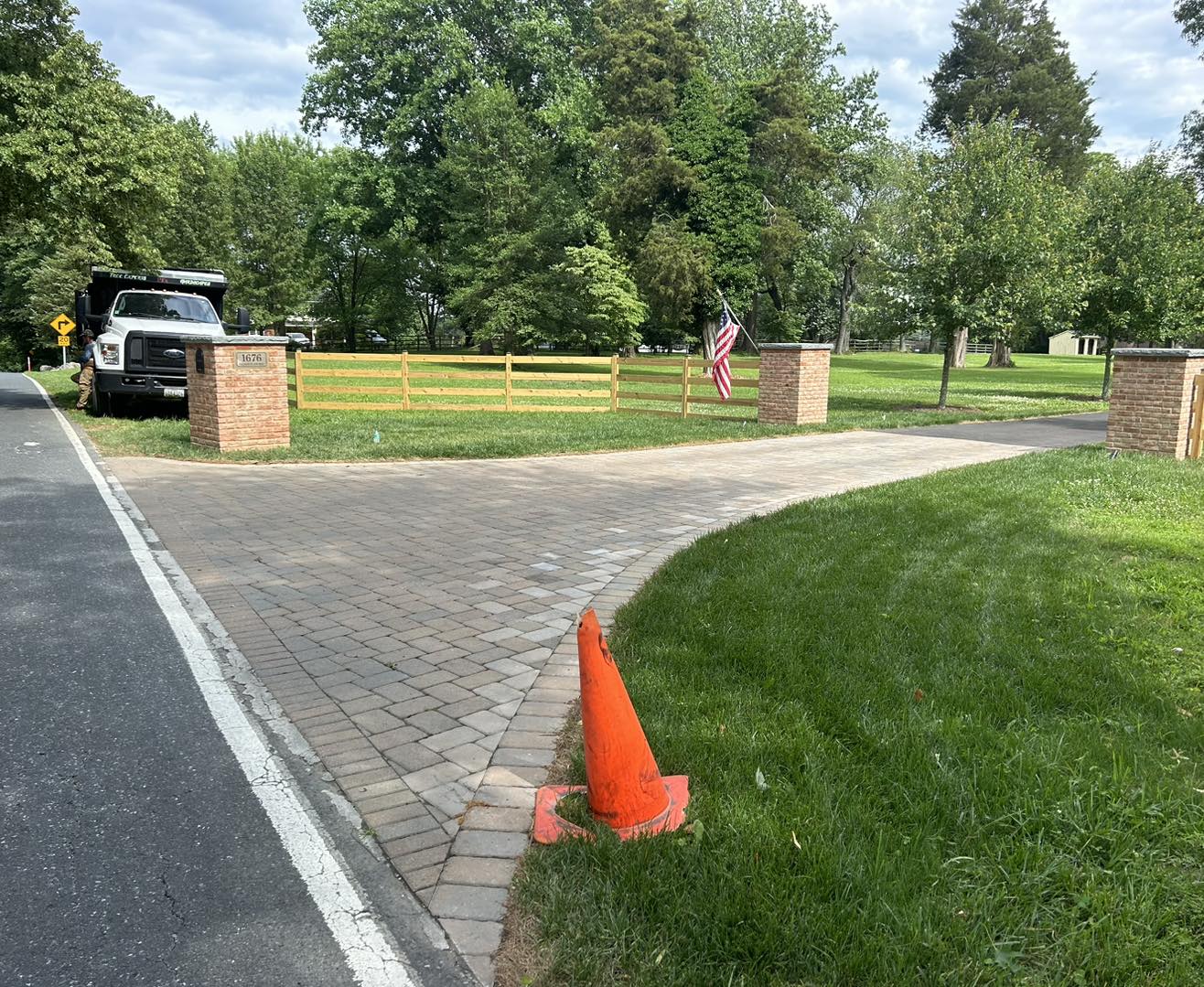
Because brick is installed as individual units, a damaged brick can usually be lifted and replaced without disturbing the surrounding surface.
The considerations with brick are cost and traction.
It generally costs more than concrete, and clay brick can become slick when wet or shaded, which is worth weighing for steps and heavily used walkways. Installed on a properly prepared base, though, brick is durable, holds its color well, and ages gracefully.
Brick tends to be the right call when you want a classic look that complements traditional architecture, value the ability to replace individual units, and are comfortable with a higher cost than concrete.
Use this image: https://recinostreeservice.com/wp-content/uploads/2026/04/estate_paver_entryway_brick_columns_after.jpg
Pavers Materials: Strength, Flexibility, and Curb Appeal
Concrete pavers have become a popular choice for homeowners who want durability and design range in one material.
They’re manufactured units, molded from concrete and pigment, and they come in a wide variety of:
- Shapes
- Colors
- Interlocking patterns
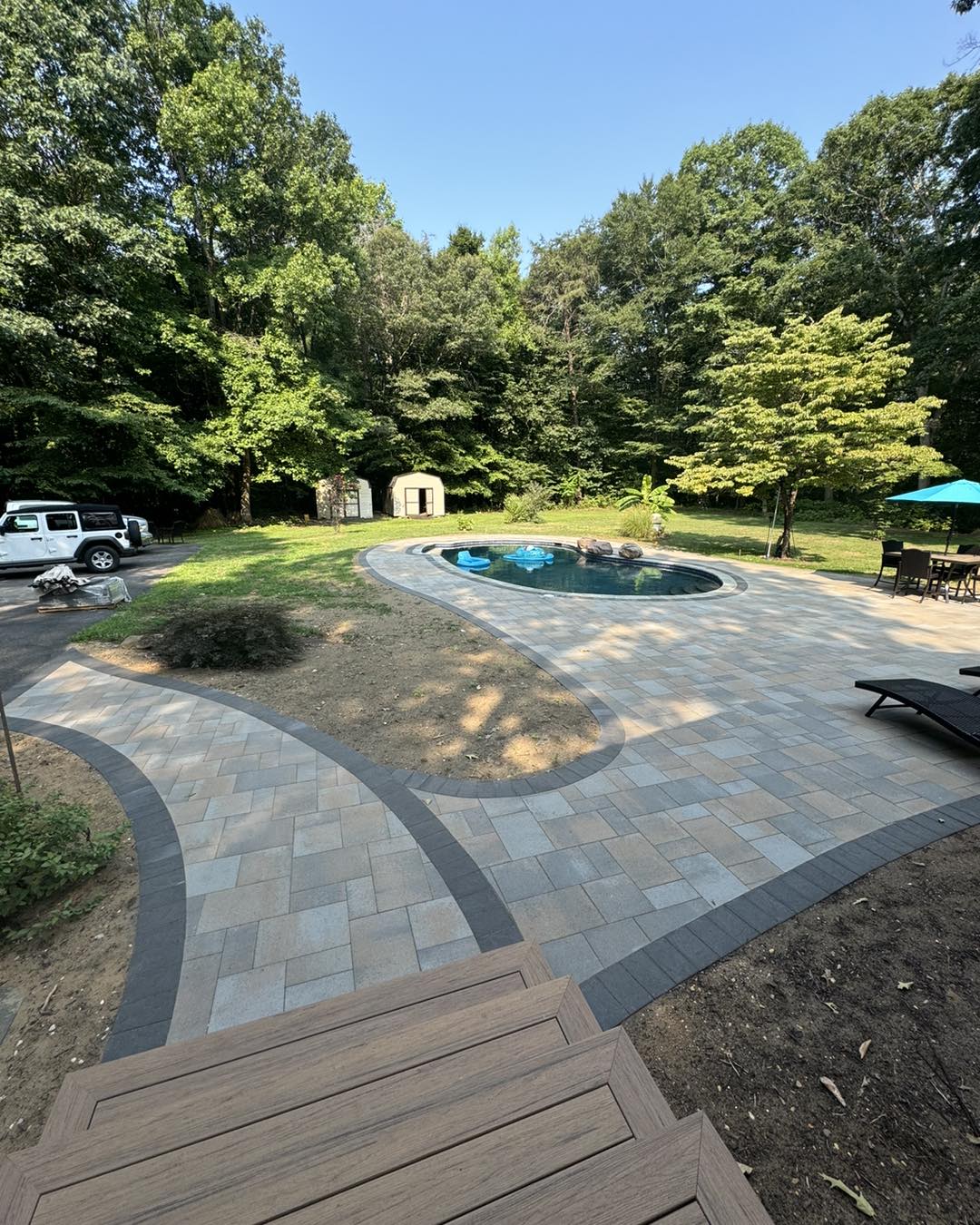
Laid over a compacted base of gravel and sand, a paver surface flexes slightly with ground movement rather than cracking, which helps it stand up to freeze-thaw stress. As with brick, individual pavers can be lifted and replaced if one is stained or damaged.
Pavers usually carry a higher upfront cost than poured concrete, driven mainly by the labor of proper base preparation and installation.
That base work is exactly what makes them last, though, and many homeowners find the durability, the repairability, and the finished appearance worth the investment, particularly for patios and driveways where both looks and load-bearing strength matter.
Pavers tend to be the right call when you want strong long-term value, the flexibility to handle Maryland’s freeze-thaw cycles, easy spot repairs, and a wide range of design options for patios, walkways, or driveways.
Use this image: https://recinostreeservice.com/wp-content/uploads/2026/04/davidsonville_pool_paver_patio_after.jpg
Concrete vs Brick vs Pavers
No single material wins on every measure.
- Concrete leads on upfront cost and continuous coverage.
- Brick leads on classic character and simple unit repairs.
- Pavers lead on durability, freeze-thaw performance, and design flexibility, at a higher installed price.
What’s the best choice?
The best choice is the one that fits your home’s style, the demands of the specific project, and how you plan to use and maintain the space.
Drainage and base preparation matter as much as the material itself.
Poorly planned surfaces can send water toward foundations, pool on patios, or wash out the soil underneath.
Slope, base compaction, edging, and joint placement all influence how a hardscape performs over the years.
Professional Hardscape Installation Makes the Difference
Base preparation, compaction, edging, drainage, and joint placement all determine whether a surface lasts for decades or starts shifting within a few seasons.
Working with an experienced installer helps you compare materials honestly against your budget and site conditions, and ensures the details that aren’t visible, the ones under the surface, are done right.
Recinos Landscaping & Tree Service provides hardscaping services for residential and commercial properties across Maryland, installing patios, walkways, driveways, concrete surfaces, brick hardscaping, and outdoor living features with careful site preparation and thorough cleanup. Since 2010, we’ve served Annapolis, Arnold, Edgewater, Severna Park, and surrounding communities throughout Anne Arundel County and the Eastern Shore.
Call 410-220-6547 or request a free estimate to talk through the right hardscape material for your project. Every property is different, so an on-site evaluation comes first.
Frequently Asked Questions About Hardscape Materials
1. What materials are used in hardscape?
Hardscaping uses the non-living, structural parts of a landscape. The most common materials are concrete, brick, and concrete pavers, along with natural stone, flagstone, asphalt, gravel, and wood. Each brings different strengths in cost, durability, appearance, and maintenance, and many projects combine more than one. Patios and walkways often use pavers, brick, or stamped concrete, while driveways may use concrete, pavers, or asphalt depending on budget and load requirements.
2. What is the cheapest hardscape material?
Among the surfaces used for patios, walkways, and driveways, poured concrete is usually the most budget-friendly per square foot, with gravel being even cheaper for informal paths and drainage areas. Concrete’s lower upfront cost is one of its main advantages. Keep in mind that the cheapest material isn’t always the best long-term value, since repair visibility and lifespan factor into the total cost over time.
3. Can you DIY hardscape?
Smaller, lighter projects like a simple gravel path or a small paver walkway can be a realistic DIY effort for a handy homeowner. The results depend heavily on base preparation, though, which is the part most DIY projects get wrong. Compaction, slope, edging, and drainage all determine whether a surface stays level or starts shifting and settling. Patios, driveways, retaining features, and anything load-bearing or tied to drainage are generally better handled by a professional, since correcting a failed base after the fact usually costs more than doing it right the first time.
4. What is the best material for outdoor pavers?
When people ask about “pavers,” they’re usually comparing concrete pavers, brick pavers, and natural stone pavers. Concrete pavers are the most popular for their balance of strength, cost, and design variety, and they handle Maryland’s freeze-thaw cycles well when installed over a proper base. Brick pavers offer a classic look and easy unit repairs. Natural stone pavers deliver the highest-end appearance at the highest cost. The best choice depends on your budget, the look you want, and how much traffic or vehicle weight the surface will carry.
5. What is the lowest maintenance patio material?
Concrete pavers and poured concrete are generally the lowest-maintenance patio surfaces. Pavers need little more than occasional sweeping, periodic joint sand replacement, and an optional seal, and any damaged unit can be swapped out individually. Poured concrete requires minimal routine care, though cracks, when they appear, are harder to repair cleanly. Natural stone and brick can require a bit more attention depending on the finish. Matching the material to how much upkeep you’re willing to do is the key to a patio that stays easy to enjoy.